sizcache="" sizset="64">
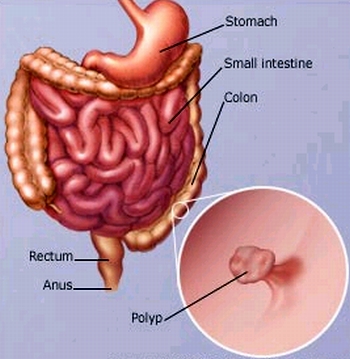
The colon (together with the rectum) are component of the significant intestine (bowel). The colon is a muscular tube that is about five feet long. It absorbs water and nutrients from food passing via. The rectum, the lower six inches of the digestive tract, serves as a holding place for stool, which then passes out of the body by way of the anus. The colon is divided into 4 sections: the ascending colon, transverse colon, descending colon, and sigmoid colon. Most colorectal cancers arise in the sigmoid colon -- the portion just above the rectum. They ordinarily commence in the innermost layer and can grow through some or all of the several tissue layers that make up the colon and rectum. Cancer can, yet, develop in any portion of the colon. The extent to which a cancer penetrates the many different tissue layers of the colon determines the stage of the illness.
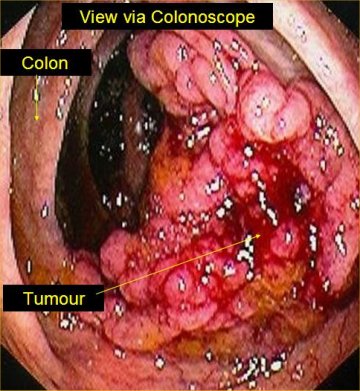
What is Colon Cancer? Colon and rectal cancers are the second most prevalent kind immediately after lung cancer among men, and the third most prevalent immediately after breast cancer and lung cancer in women. Most colorectal types grow slowly over a period of a variety of years, quite often beginning as little benign growths named polyps. Removing these polyps early, prior to they develop into malignant, is an helpful means of preventing colorectal cancer. If the epithelia cells (the cells in the mucous membrane of the colon) turn cancerous and start to grow and replicate in an abnormal and uncontrolled way, the body can't organize these cells for typical function and the cells form a mass that is referred to as a tumor. Malignant tumors in the colon can ultimately penetrate via the colon and spread to other parts of the body, crowding and destroying standard cells.
Every person is potentially at danger of developing colon cancer at some point in their lifetime. Despite the fact that colon cancer happens mainly in mature individuals, it can also happen in younger males and females as properly. Some of the danger factors consist of a personal history of colonic or rectal polyps, a personal or family members history of colon or rectal cancer, and specific conditions, such as chronic ulcerative colitis (CUC) and Crohn's disease. Diet regime also appears to be a factor in the development of colon cancer.
Warning Symptoms Of Colon Cancer: There are symptoms or warning symptoms that should raise the suspicion that 1 has cancer. These contain: Obstruction As the colon cancer grows, especially if it is situated in the transverse colon or in the descending and sigmoid colons, it may cause obstruction, leading to a develop-up of pressure. This can result in discomfort and in swelling of the abdomen. In much more extreme cases of obstruction, there may well also be nausea and vomiting. Bleeding As tumors expand, they can be traumatized by the fecal stream, causing them to bleed. The blood is usually hidden in the stool and not readily visible. In some cases bleeding may possibly be visible on the stool or there is rectal bleeding. Anemia In some situations, as the tumor bleeds, it causes iron deficiency anemia to happen. Pain Once the tumor penetrates the wall of the colon and begins to invade adjacent tissue, it can cause discomfort, together with further symptoms. For example, if the cancer spreads to the bladder, it may well trigger urinary issues. Wasting Syndrome In some cases, colon cancer can cause a loss of appetite, weight, and strength.
Though the above warning signs can happen even in individuals without colon cancer, if a person does exhibit these symptoms, suitable diagnostic procedures should be advised in order to rule out colon cancer.
Colon cancer normally grows slowly over a period of years. As soon as the cancer breaks by way of the colon, it can enter blood or the lymphatic technique grow and spread pretty quickly. As the cancer grows, it commonly spreads into the liver and the lungs. It can also spread to the bones, particularly in the pelvis. Depending on the location of the tumor, it can also spread to the clavicle.
The American Cancer Society recommends that screening for colon cancer in people without any symptoms commence at age 50. Screening must consist of a yearly digital rectal examination (DRE) and a fecal occult bloot test (FOBT). Sigmoidoscopies, preferably flexible endoscopic sigmoidoscopies, should certainly happen each three to 5 years. For everyone with a initially-degree relative (parent, sibling, or kid) who has had colon cancer under the age of 55, screening must commence by age 40.
Details - Colon Cancer Is the second leading of death from cancer in the U.S. More than 50% of all new circumstances of colon cancer involve metastasis by the time of diagnosis Roughly 102,900 Americans will be diagnosed with colon cancer this year. Approximately 48,100 Americans will die from colon cancer this year. 80 to 90 million Americans are at danger of creating colon cancer If colon cancer is detected and treated early, the survival rate is high.
Screening The American Cancer Society and the American College of Gastroenteroloy recommend that screening for colon cancer in people without any symptoms commence at age 50. The recommended technique for screening is a colonoscopy (repeated just about every ten years if no polyps or tumors are identified and the person has no danger elements). The advised option strategy for screening is a yearly digital rectal examination (DRE) and a fecal occult bloot test (FOBT). Sigmoidoscopies, preferably flexible endoscopic sigmoidoscopies, must occur every 3 to five years. For any one with a very first-degree relative (parent, sibling, or kid) who has had colon cancer under the age of 55, screening is recommended starting at age 40.
Medical Malpractice and Colon Cancer The incidence of medical malpractice associated to the diagnosis of colon cancer is alarming. It is the second most widespread kind of cancer in the U.S., resulting in an expected 48,100 deaths this year. Nonetheless, too numerous males and girls have their cancer diagnosis delayed when the doctors in whose hands such men and ladies entrust their properly-getting fail to perform appropriate screening tests, fail to properly interpret test results, and fail to take crucial steps when symptoms of cancer are reported. When this occurs, the physician has been negligent. And the tragic result of this negligence is too usually the loss of treatment choices and/or the loss of chance of survival.
My law firm is devoted to explaining how medical malpractice arises in the context of a failure by a physician to timely diagnosing colon cancer to describing what is involved in pursuing a medical malpractice claim and to providing a handy and totally free lawyer consultation to those who think they have been the victim of medical malpractice.
Why You Might possibly Have a Claim According to a report by the Institute of Medicine, medical errors are responsible for at least 44,000 deaths each and every year in the United States and possibly as quite a few as 98,000 every year. The following are among the alot more frequent forms of negligence or medical malpractice by physicians in diagnosing and/or treating colon cancer: Failing to carry out a routine digital rectal examination (DRE) Failing to identify a cancerous mass in the rectum or lower colon for the duration of a routine digital rectal examination Failing to carry out a screening sigmoidoscopy or colonoscopy Failure to order appropriate diagnostic examinations (such as a colonoscopy) to test for colon cancer when a patient exhibits symptoms that can be brought on by colon cancer Misinterpreting the biopsy results Failing to react to biopsy findings Failing to suggest suitable treatment options and Failing to follow-up with the patient. The above are only examples and are by no indicates intended to be an exhaustive list of acts of malpractice. If you suspect that your doctor failed to detect and/or appropriately treat your colon cancer, you should really get in touch with a competent lawyer quickly.
Contact us for a Zero cost Consultation
Please really feel free of charge to get in touch with me directly at or 516.358.6900 if you or a family member have been diagnosed with Colon Cancer and a doctor or other medical professional discounted complaints of rectal bleeding as just hemorrhoids, failed to screen for colon cancer by recommending a colonoscopy or testing for blood in the stool and a sigmoidoscopy or colonoscopy, or failed to follow up following an abnormal test result.